WASH Climate Change Adaptation Oxfam (2025)
Climate change is already having significant negative effects on the lives and livelihoods of people living in countries affected by conflicts and disasters. It is also making the provision of humanitarian support more difficult. This situation can be expected to get worse in the coming years. The humanitarian Water, Sanitation and Hygiene (WASH) sector faces particular risks and challenges. The increased temperatures resulting from global heating disrupt the water cycle: increasing evaporation, accelerating the melting of ice and snow and allowing more water to be stored in the atmosphere. This, in turn, leads to more erratic and intense precipitation and changes the availability of water in many places. At the same time, climate change affects the activity, seasonality and range of many of the pathogens that cause waterborne diseases. It also increases the frequency and scale of events such as floods and droughts, damaging WASH infrastructure while simultaneously increasing the need for humanitarian WASH services.
Humanitarian WASH programmes need to adapt to these threats. Oxfam, with funding support from GFFO, has developed guidance on a wide range of climate change adaptations relevant to the WASH sector in humanitarian settings. These 12 Guidance Notes are intended to support WASH implementing agencies to consider climate risks and how they might adapt WASH programming in response to those risks.
Bibliographic information
Oxfam (2025). WASH Climate Change Adaptation Oxfam
Filter / Tags
Public awareness, advocacy and civil society engagement OtherGlobalInternational NGOGuidelines and manualsEnglish
Downloads
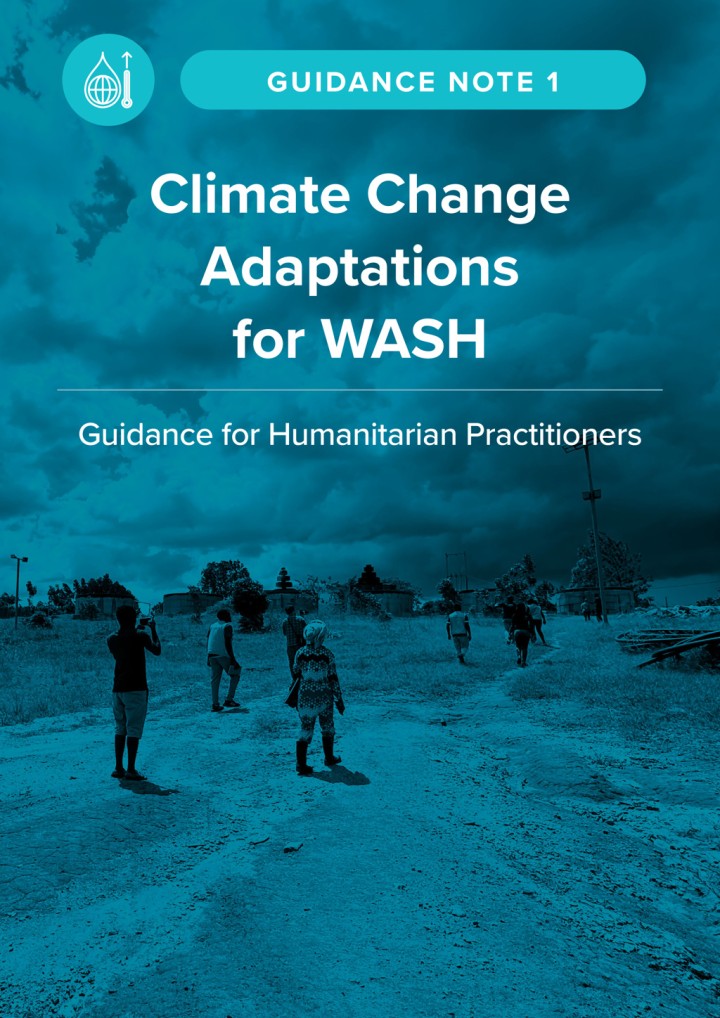
GN 1: Climate Change Adaption for WASH
Type: application/pdf
Size: 4.14 MB
GN 2: Integrated Water Resource Management
Type: application/pdf
Size: 3.24 MB
GN 3: Climate Change Adaptions for Hygiene Promotion, Vector Control and Outbreak Response
Type: application/pdf
Size: 1.53 MB
GN 4: Passive Cooling for Public Buildings Guidance for Humanitarian Practitioners
Type: application/pdf
Size: 13.93 MB
GN 5: Improving the resilience of groundwater infrastructure to climate change
Type: application/pdf
Size: 18.72 MB
GN 6: Risk communication and community engagement strategies for climate change adaption in WASH programming
Type: application/pdf
Size: 1.17 MB
GN 7: Climate data for WASH programming
Type: application/pdf
Size: 2.38 MB
GN 8: Anticipatory action in WASH
Type: application/pdf
Size: 4.73 MB
GN 9: Nature-based solutions to address climate change in WASH
Type: application/pdf
Size: 9.81 MB
GN 10: Climate change and community-based water resources managament
Type: application/pdf
Size: 3.87 MB
GN 11: Climate resilient faecal sludge management
Type: application/pdf
Size: 8.8 MB
GN 12: Programmatic response to extreme heat
Type: application/pdf
Size: 1.9 MB